01
Run discovery
Invite business units and contributors to disclose current and planned AI use.

Product
Find the AI your organisation is using. Set a practical strategy, keep each use under review and report progress to leadership.
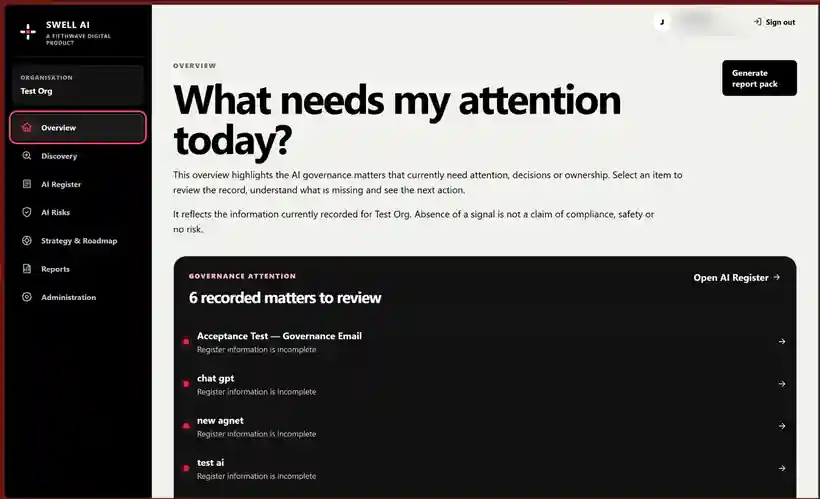
Organisation-wide discovery
Create a discovery campaign, invite each business unit and give contributors a simple way to disclose one AI use at a time.
Track which business units have responded and where follow-up is needed.
Capture staff-led use, supplier products and AI features embedded in existing software.
Review possible duplicates before adding confirmed uses to the AI register.
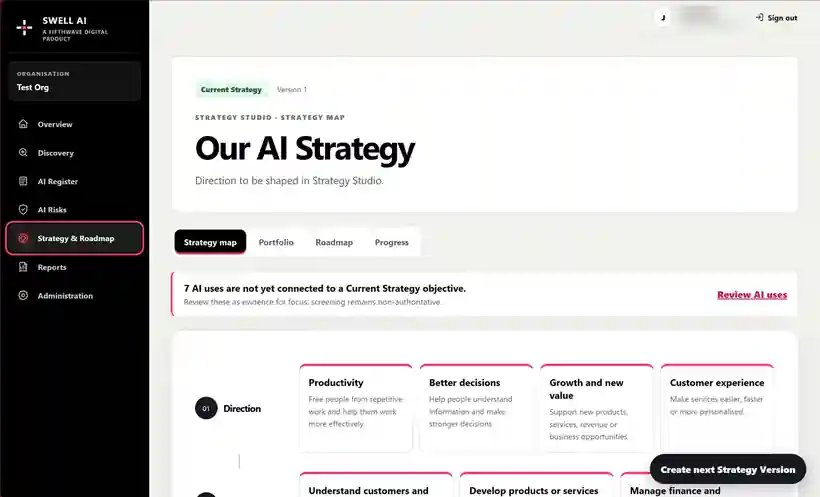
AI strategy
Build your AI strategy inside Swell AI. Define your objectives, priorities, initiatives and measures, then link each roadmap initiative and AI use to the strategy.
Set the organisation’s AI direction, principles and priorities.
Link roadmap initiatives and use cases to each strategic objective.
Track progress, expected value, delivery status and governance issues in management and board reports.
Governance workflow
Start with a disclosure, assess the use and complete the required actions. The same record then supports management and board reporting.
Invite business units and contributors to disclose current and planned AI use.
Create a clear record for each distinct use, including its purpose, product and business context.
Make business, technical and review responsibilities clear from the start.
Ask questions that match the purpose, impact, data, people and level of autonomy.
Assign controls, evidence and follow-up work to named owners with clear due dates.
Keep approvals, conditions and reasons with the evidence available at the time.
Bring incidents, supplier changes, new data and changed uses back into review.
Give leadership a concise view of strategy, portfolio status, risks, actions and decisions.
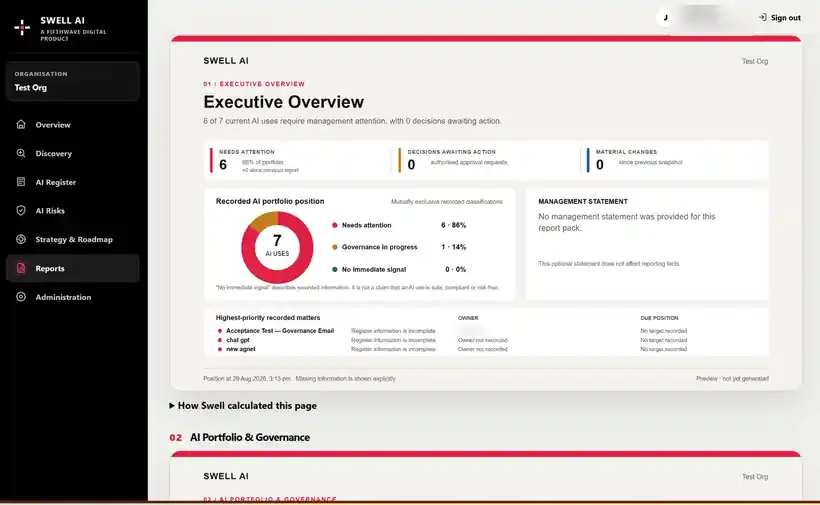
Board & executive reporting
Use the same governed records to present portfolio position, decisions, material changes and priority matters in a concise executive view.
Better decisions
One AI product can be useful for a low-impact task and unsuitable for a high-impact decision. Swell keeps three questions separate:
Assessment example
Swell flags issues that need attention and shows reviewers why they were raised and what to check next.
See Swell AI