Inventory changes
The known portfolio changes as new tools, embedded vendor features and employee uses are discovered.

Board Reporting / Swell AI Governance
A board pack should tell directors whether management knows where material AI is being used, whether accountable owners and controls are in place, what changed, what remains unresolved and where a decision is required.
Where AI governance information sits in separate spreadsheets, vendor questionnaires, privacy reviews, emails and project notes, the board-report author must rebuild the story each cycle. That consumes time, creates inconsistent definitions and makes it difficult to explain later why management believed a use was controlled or approved.
The known portfolio changes as new tools, embedded vendor features and employee uses are discovered.
Approval rationale, conditions and exceptions may live in minutes, emails or workflow systems rather than the register.
Supplier terms, privacy reviews, controls and testing evidence can become stale before the next board cycle.
A polished deck may describe the position but still lack a traceable link to the governance record behind it.
The questions directors need answered
The board should see material exceptions and direction of travel rather than prompt transcripts, model parameters or every control task.
The example below uses the fictional scenario from the product strategy to show what a management-first report can look like. It is intentionally board-oriented: portfolio, risk, approval, exceptions, incidents, changes and decisions.
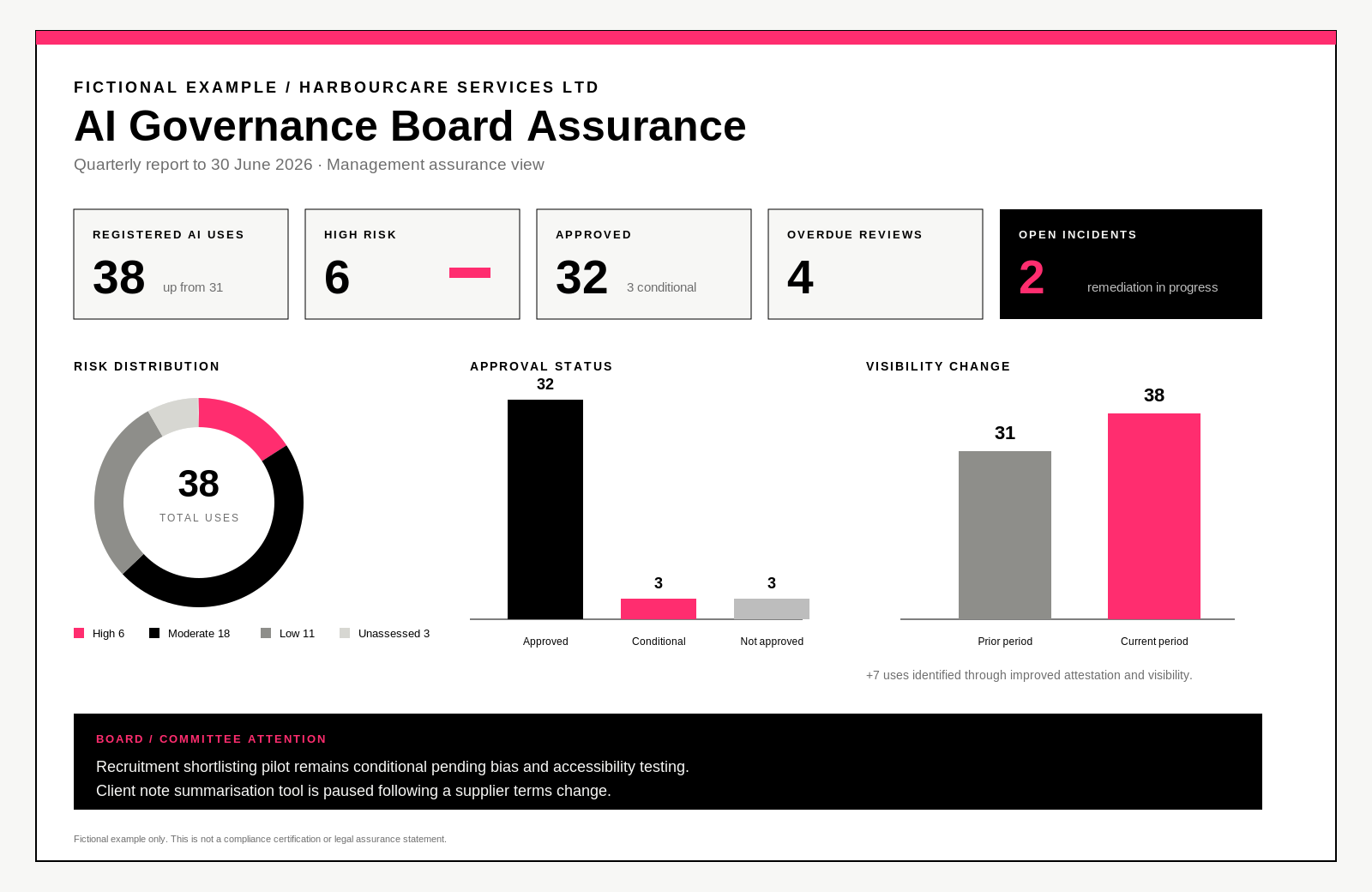
Fictional example only. The visual is not a compliance certificate and does not represent a real customer.
Reporting period, issued version, accountable executive, scope and the limits of management's assurance.
Three to five messages, material events, direction of travel and decisions requested.
Active, proposed and retired uses; business-unit coverage; additions; attestation completeness.
High-risk uses and approved, conditional, rejected, unapproved and unassessed status.
Unknown AI, overdue reviews, unresolved mandatory controls and expired conditions.
Material events, affected uses, response status and whether governance was reopened.
Top actions, accountable owners, due dates and matters requiring committee attention.
Subscription cost, budget, expected/realised value and confidence in the measurement, without forcing weak data into the core assurance story.
Management's evidence basis, limitations and next reporting date — never a blanket “compliant” badge.
What to leave out
The most useful board commentary explains why the portfolio changed rather than simply showing an increase.
The report is not intended to become a second source of truth. Portfolio measures and exception lists come from the same use-case records, controls, approvals, incidents, material changes and reviews that governance teams maintain during the quarter.
Owners and governance leads keep the portfolio current throughout the reporting period.
Missing owners, overdue reviews and known information gaps are made visible before cutoff.
Governance leads confirm high-risk uses, incidents, expired conditions and open actions.
Management adds context and requested decisions without changing the underlying facts.
The final report is locked to its reporting period so later changes do not rewrite history.
See the board workflow
A Swell demo can start with the reporting outcome and work backwards to the governance record needed to support it.